Hematology Department
The Hematology Department at Azhar Medical Lab provides a comprehensive range of routine and specialized blood investigations to support the diagnosis, evaluation, and monitoring of hematological disorders.
Our services cover the assessment of anemia, infections, abnormal blood cell counts, platelet disorders, bleeding and clotting abnormalities, and other conditions affecting the blood and blood-forming organs.
The department follows standardized laboratory procedures and appropriate quality-control practices to support accurate, reliable, and clinically useful results.
Routine Hematology Investigations
Our routine investigations provide essential information about blood cells and support the assessment of common hematological conditions.
- Complete Blood Count (CBC)
- Hemoglobin (Hb)
- Hematocrit (HCT)
- Red Blood Cell (RBC) Count
- White Blood Cell (WBC) Count
- Differential Leukocyte Count
- Platelet Count
- Red Blood Cell Indices (MCV, MCH, MCHC)
- Erythrocyte Sedimentation Rate (ESR)
- Peripheral Blood Smear (PBS)
- Reticulocyte Count

Specialized Hematology Tests
When a more detailed assessment is needed, our laboratory can perform or coordinate specialized investigations.
- Absolute Neutrophil, Eosinophil, and Lymphocyte Counts
- Manual Differential Leukocyte Count
- Detailed Peripheral Blood Film Examination
- Red and White Blood Cell Morphology Assessment
- Platelet Morphology Assessment
- Evaluation of Abnormal Blood Cell Counts
- Investigation of Suspected Hemolytic Anemia
- Assessment of Selected Hematological Disorders
Coagulation Profile
Coagulation investigations help evaluate the blood-clotting system and support the assessment of bleeding and thrombotic disorders.
- Prothrombin Time (PT)
- International Normalized Ratio (INR)
- Activated Partial Thromboplastin Time (aPTT)
- Fibrinogen
- D-Dimer
- Thrombin Time (TT)
PT/INR and aPTT may be requested for selected bleeding disorders, anticoagulant monitoring, and other clinically indicated assessments.
Anemia Investigation
Specialized investigations may help identify the underlying causes of anemia and other red blood cell abnormalities.
- CBC with Red Blood Cell Indices
- Peripheral Blood Smear Examination
- Reticulocyte Count
- Serum Iron and Serum Ferritin
- Total Iron-Binding Capacity (TIBC)
- Transferrin Saturation
- Vitamin B12 and Folate
- Hemolytic Anemia Investigations, When Indicated
- Hemoglobinopathy Screening, Where Available
Advanced Hematology Investigations
For selected patients, further investigations may be required for suspected bone marrow disorders, hemoglobinopathies, leukemia, lymphoma, or inherited bleeding disorders.
- Hemoglobin Electrophoresis or High-Performance Liquid Chromatography (HPLC)
- Direct and Indirect Antiglobulin Tests (Coombs Tests)
- Bone Marrow Aspiration and Biopsy Assessment
- Flow Cytometry and Immunophenotyping
- Specialized Leukemia and Lymphoma Investigations
- Selected Coagulation Factor Assays and bleeding-disorder tests
Advanced investigations may be performed through specialized laboratory facilities or referral services when they are not available on-site.
CBC & Peripheral Blood Smear Examination
Complete Blood Count (CBC) evaluates red blood cells, white blood cells, hemoglobin, hematocrit, platelets, and red blood cell indices. Results can help physicians assess anemia, infections, inflammation, blood loss, platelet abnormalities, and other blood-related conditions.
Peripheral blood smear examination provides microscopic evaluation of the size, shape, distribution, and appearance of blood cells. It can help identify abnormal blood cell morphology, immature cells, and findings that may require further investigation.
Specimen Requirements
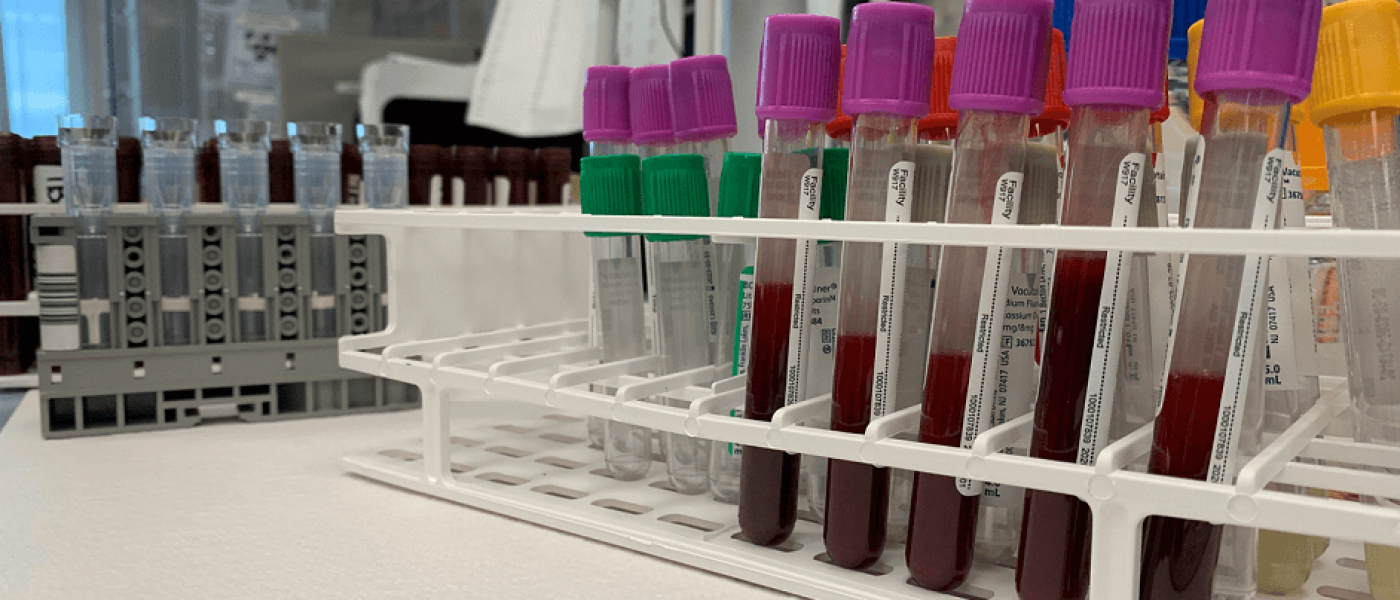
Proper specimen collection, correct tube selection, identification, handling, and transportation are essential for reliable results.
- EDTA Whole Blood: CBC and many hematological investigations
- Sodium Citrate Plasma: PT/INR, aPTT, and other coagulation tests
- Serum or Plasma: Selected specialized investigations
- Bone Marrow Specimens: Specific investigations of bone marrow disorders
Laboratory Equipment, Workflow & Quality
The department is supported by automated hematology analyzers, laboratory microscopes, centrifuges, and supporting equipment for blood sample preparation and analysis.
Diagnostic workflow: Sample Collection → Sample Identification → Hematological Analysis → Microscopic Examination, When Required → Quality Control → Result Verification → Laboratory Reporting.
Azhar Medical Lab follows standardized procedures and internal quality-control practices to monitor analytical performance, reagent quality, specimen integrity, and the reliability of reported results.
Reports include relevant findings and reference intervals. Results should be interpreted by qualified healthcare professionals alongside the patient’s symptoms, medical history, clinical examination, and other investigations.
Hematology Services
The department provides a range of hematological investigations, including:
- Complete Blood Count (CBC)
- Hemoglobin (Hb)
- Hematocrit (HCT)
- Red Blood Cell (RBC) count and indices
- White Blood Cell (WBC) count and differential
- Platelet count
- Peripheral Blood Smear (PBS)
- Reticulocyte Count
- ESR (Erythrocyte Sedimentation Rate)
- Coagulation investigations
- Prothrombin Time (PT/INR)
- Activated Partial Thromboplastin Time (aPTT)
- Other specialized hematology tests according to clinical requirements
Complete Blood Count (CBC)
CBC is one of the most commonly requested blood investigations and provides information about:- Red blood cells
- White blood cells
- Hemoglobin level
- Hematocrit
- Platelets
- Red-cell indices such as MCV, MCH, and MCHC
- White-cell differential count
Peripheral Blood Smear
Peripheral blood smear examination provides microscopic assessment of blood cells and can help evaluate abnormalities in:- Red blood cell morphology
- White blood cell morphology
- Platelet appearance and distribution
- Selected hematological disorders
Coagulation Testing
The department provides coagulation investigations to assess the blood-clotting system, including:
- PT / INR
- aPTT
Specimens
Most hematology investigations require:- Whole blood in EDTA tubes — for CBC and many hematological tests
- Citrated plasma — for PT/INR and aPTT
- Other specimens according to the specific investigation
Laboratory Equipment & Technology
The Hematology Department is supported by modern laboratory technology, including:
- Automated Hematology Analyzer
- Automated or semi-automated coagulation analyzer
- Laboratory microscopes
- Centrifuges
- Supporting equipment for blood sample preparation and analysis
Diagnostic Workflow
Sample Collection → Sample Identification → Hematology Analysis → Microscopic Examination, When Required → Quality Control → Result Verification → Laboratory Report
Quality Control
The department follows standardized procedures and appropriate internal quality-control measures to monitor analyzer performance, reagent quality, specimen integrity, and accuracy of reported results.
Reporting
Results are reviewed according to established laboratory procedures and reported with appropriate reference ranges. Abnormal findings may require clinical correlation and, where appropriate, additional investigations.
Azhar Medical Lab provides reliable hematological testing using modern laboratory technology and standardized procedures to support accurate diagnosis and patient care.
Book an Appointment
For orthopedic consultation, bone and joint assessment, injury evaluation, or follow-up care, please contact Azhar Medical Group.
Azhar Medical Group
Phone: +93 787 116 578 / +93 784 003 008
Email: info@azharmedicalgroup.com
Address: Karte Parwan Square, Kabul, Afghanistan.
Our team is committed to helping patients improve mobility, manage musculoskeletal conditions, and achieve better physical health.
Book Appointment